
 By admin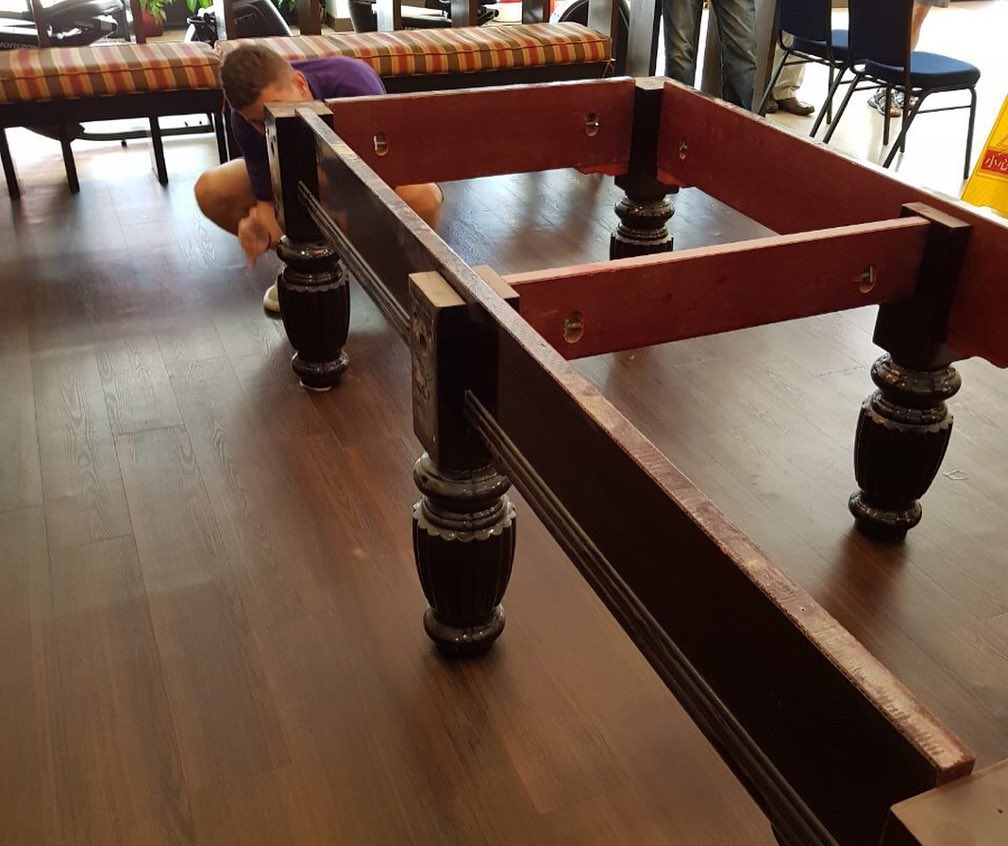
A pool table is a work of precision. Every roll, rebound, and shot relies on perfect balance. Even the smallest tilt can throw off a game, causing frustration and, over time, hidden damage to the table itself. That is why re-leveling a pool table after a move is not optional — it is necessary if you care about performance and longevity.
In a city like New York, where apartments are compact, floors are often uneven, and buildings can subtly shift over the years, re-leveling ensures that your table performs exactly as it should. Whether your pool table was moved across the street, up a few floors in the same building, or into a brand-new space, professional re-leveling restores its stability, accuracy, and playability so every game feels right again.
Why Re-Leveling Matters So Much After a Move
Moving a pool table is a complex process that can affect its structure, even when handled by experts. During transport, small vibrations, minor shifts, or changes in angle can alter how the table settles once it’s placed in its new location. The heavier and larger the table, the more sensitive it becomes to even small changes in support.
The slate that forms the playing surface can weigh hundreds of pounds, and it rests on a wooden or metal frame that depends on even, consistent support. If even one leg is slightly lower than the others, the slate will lean toward that side. Over time, this imbalance can become more noticeable as the table “settles” into the floor beneath it.
Professional re-leveling corrects these imbalances before they become a problem. Technicians use precision tools to restore exact alignment, ensuring every ball rolls smoothly and predictably. Without this process, your table’s performance suffers, shots feel inconsistent, and the structure can weaken long term — all of which are far more expensive to fix later than a proper re-leveling service now.
The Physics of Pool Table Balance
Pool tables are built with extraordinary precision so that gravity acts evenly on every point of the playing surface. When the table is perfectly level, balls roll in straight lines, cushions rebound consistently, and every shot behaves the way a player expects.
If the table is even slightly tilted, the cue ball and object balls will drift toward the lower side. This drift is caused by gravity pulling more strongly in one direction across the surface. The tilt may be so minor that it’s invisible to the eye, but it becomes obvious when you watch the ball’s path over a longer distance.
Beyond affecting play, uneven balance places extra strain on the frame and legs. Over time, this can loosen joints, warp wood, and even cause hairline cracks where the slate is supported. A table that remains unlevel for years may eventually require structural repairs — something that could have been avoided with timely re-leveling and proper support from day one in its new location.
The Hidden Problems Caused by an Unlevel Table
An unlevel pool table does not just make the game less fun. It can trigger a chain of problems that shorten the table’s lifespan and lead to unnecessary expenses.
Inconsistent Ball Roll
Balls will not travel straight, even when struck perfectly. Instead, they will drift toward the lower side, making accurate aiming nearly impossible. Players may compensate subconsciously, but that only masks the underlying issue and leads to frustration.
Uneven Cushion Response
When the table leans even slightly, the cushions on one side absorb more impact than the others. This makes rebound angles unpredictable and can throw off even skilled players who rely on consistent bank shots and position play.
Premature Felt Wear
Constantly rolling toward one direction causes felt fibers to wear out faster in certain areas. The result is uneven texture, shiny tracks, and visible wear lines that affect speed, spin, and control. You may end up replacing felt far sooner than necessary.
Frame and Leg Stress
When the table is unbalanced, the weight distribution becomes uneven. This extra stress on the frame and leg joints can lead to warping, tiny cracks, and loose hardware. Over time, these issues can compromise the overall structure and stability of the table.
Lowered Resale Value
A poorly leveled table looks and performs worse, decreasing its resale value. Serious buyers, installers, or technicians can quickly tell when a table has not been maintained properly, which can result in lower offers or more negotiation around required repairs.
Common Signs That Indicate Your Table Needs Re-Leveling
Many pool table owners do not notice imbalance right away, especially if they are not playing regularly. However, a few subtle signs usually appear within days or weeks after a move:
- Balls drift to the same side no matter where they are struck.
- Straight shots start to curve slightly at the end of their roll.
- The cue ball rolls back slowly when it should stop.
- The table creaks or shifts slightly when leaned on or bumped.
- The felt appears stretched, wrinkled, or uneven in certain spots.
- One side or corner of the table feels lower when you rest your hands on it or check with a level.
You can test your table quickly by rolling the cue ball gently across the length and width of the table and watching for any drift. If you notice even one of these signs, it is time to schedule a professional re-leveling before minor issues grow into larger problems.
The Professional Re-Leveling Process: Step by Step
Re-leveling is not just about tightening screws or slipping shims under table legs. It is a detailed, multi-step process that restores balance across the entire playing surface. Here is how professionals typically handle it.
Comprehensive Inspection
Technicians begin by examining every part of the table — frame, legs, slate, and felt — for structural issues. They check for any signs of shifting during transport, such as separated seams, loosened bolts, or hairline cracks. They then take measurements using high-precision instruments to identify any tilt, uneven pressure points, or areas where the slate is not fully supported.
Preparing the Base and Frame
The floor beneath the table is assessed to ensure stability. Uneven or sloped floors, common in older NYC apartments and brownstones, require careful adjustment. Movers and technicians use leg levelers or shims to establish a perfectly flat base before making any changes to the slate. This foundation step is crucial. Even a perfectly aligned slate will eventually go out of level if the floor underneath is not properly accounted for.
Aligning and Leveling the Slate
Once the base is stable, professionals focus on the slate itself. Most tables use three pieces of slate that must align seamlessly. Each section is very carefully lifted, repositioned if necessary, and adjusted using laser levels and machinist-grade measuring tools. After alignment, the seams between slate pieces are filled with beeswax or resin to eliminate tiny gaps or ridges. Once the filler sets, the surface is polished smooth so the seam is virtually undetectable during play.
Securing and Calibrating Components
With the slate leveled and aligned, technicians reinstall the felt and frame components, if they were removed or adjusted. They check the torque on all bolts, ensuring that hardware is tight enough to be secure but not so tight that it distorts the frame. Rails and cushions are adjusted so that rebound angles are consistent on all sides. After assembly, they perform a series of rolling tests, sending balls across different points and directions on the table. If even the slightest drift occurs, they make micro-adjustments until the movement is completely natural and accurate.
Final Testing and Quality Assurance
The process concludes with multiple rounds of fine-tuning. Technicians test ball roll, cushion bounce, and felt tension one last time, sometimes involving the owner so they can feel the difference firsthand. The table must pass every test before being declared level and ready for serious play.
Specialized Tools Used for Professional Re-Leveling
Professionals use specialized tools that go far beyond standard home equipment. These instruments allow them to achieve precision down to fractions of a millimeter — something simple bubble levels cannot do.
- Machinist-grade levels – For pinpoint accuracy across the entire slate surface.
- Laser leveling systems – To project straight reference lines and detect even the slightest tilt.
- Digital inclinometers – To measure slope angles and confirm exact corrections.
- Beeswax and resin seam fillers – To smooth slate joints and eliminate micro ridges.
- Adjustable torque wrenches – To apply consistent, correct pressure to bolts and brackets.
- Leg levelers and shims – To achieve perfect stability on sloped or uneven flooring.
These tools allow experts to guarantee perfect leveling, precise gameplay, and structural balance that holds up over months and years of regular use.
DIY Leveling vs. Professional Re-Leveling
It might be tempting to adjust your table on your own, especially if you notice just a slight tilt. However, DIY re-leveling rarely achieves true accuracy and can sometimes make things worse.
DIY Re-Leveling
- Uses basic bubble levels and manual guesswork.
- Often focuses only on adjusting leg height rather than the full structure.
- Cannot correct internal misalignment, seam gaps, or frame distortion.
- May cause new imbalances if bolts are over-tightened or slate is shifted unevenly.
Professional Re-Leveling
- Involves full-frame, floor, and slate calibration as a single system.
- Uses precise instruments for reliable, repeatable results.
- Ensures structural integrity, long-term balance, and consistent rebound.
- Includes post-adjustment rolling tests and fine-tuning to confirm accuracy.
The difference is similar to tuning a piano by ear versus hiring a professional tuner. One might get “close enough” for casual use, while the other restores the instrument to its proper, reliable performance standard.
How Often Should You Re-Level a Pool Table?
Re-leveling should not be a one-time event that happens only when you move. Over time, floors can shift, supports can compress, and materials can respond to humidity and temperature changes. Periodic maintenance helps preserve consistent performance.
You should plan to re-level your table:
- After every move: Always required, regardless of distance or building.
- Every one to two years: Ideal for regular players or tables in older NYC buildings.
- After flooring changes: Carpet, padding, or new hardwood can subtly change support and balance.
- Whenever performance feels off: Any ball drift, cushion inconsistency, or visible tilt warrants inspection.
Routine re-leveling is a small investment that keeps your table playing like new, while also preventing slow, hidden damage that can accumulate over time.
Long-Term Benefits of Regular Re-Leveling
Consistent Gameplay Quality
Your table will feel the same every time you play. Ball motion stays true, rebound angles remain predictable, and you can focus on your skill instead of compensating for an uneven surface.
Extended Felt and Cushion Life
Even balance ensures that no single area experiences excessive wear. This reduces friction damage, delays re-felting, and helps cushions maintain their elasticity and responsiveness longer.
Protection Against Structural Damage
Leveling evenly distributes weight across the frame and legs. This prevents long-term strain that can cause cracks in the slate, loosened hardware, or sagging in the frame.
Better Aesthetics and Comfort
A perfectly level table simply looks right. It feels stable when leaned on, sits correctly in the room, and contributes to a more professional, high-quality appearance in your game space.
Improved Longevity
A well-maintained, properly leveled pool table can last decades with only routine care. Re-leveling is one of the key services that protects that lifespan and preserves your investment.
Why Re-Leveling Is Especially Crucial in NYC
New York’s architecture and environment make re-leveling more important than almost anywhere else. Many apartments have floors that slope slightly due to age, foundation movement, or building design. Even new buildings can have subtle irregularities in flooring.
Seasonal humidity and temperature shifts also play a role. Wood floors and frames expand and contract throughout the year, especially in spaces with strong heating or air conditioning. Radiators, windows, and HVAC systems can create microclimates that subtly affect balance.
Professional movers and technicians in NYC understand these conditions. They use advanced leveling systems and experience-based judgment to compensate for irregular floors, helping your table stay level even in challenging environments.
What Happens If You Skip Re-Leveling
Some owners assume their table is “good enough” after a move, especially if the imbalance is not immediately obvious. But skipping re-leveling can lead to:
- Cracked or separated slate due to constant uneven pressure.
- Torn, stretched, or prematurely worn felt in high-stress areas.
- Permanent frame warping from years of uneven load distribution.
- Costly repairs that can far exceed the price of a proper re-leveling service.
What starts as a minor inconvenience — a ball drifting just a little — can become a major structural problem if left unchecked. It is much more affordable to prevent these issues than to fix them later.
How Professionals Ensure Long-Term Results
Experienced movers and technicians do more than simply level the table for the moment. They aim for long-term stability by considering:
- Building conditions: Adjusting for sloped or flexible floors common in older NYC apartments.
- Environmental stability: Taking humidity, temperature, and room conditions into account.
- Post-service follow-up: In some cases, offering re-checks or advising owners on what to watch for as the table settles.
Their combination of specialized tools, experience, and local knowledge ensures that your pool table not only feels perfect when they leave, but remains reliable and balanced long after the move.
The Bottom Line: Perfect Balance Equals Perfect Play
A pool table that is not level is like a piano that is out of tune — it simply cannot perform as intended. Re-leveling is not just about improving gameplay for a night; it is about protecting your investment, preserving the structure, and extending the life of your table.
Professional re-leveling restores your table’s symmetry, ensures smooth performance, and prevents long-term damage. Whether your table is in a high-rise apartment, a Brooklyn loft, or a neighborhood bar, precision leveling keeps it performing at its best for years to come.
If your pool table has been moved recently or feels even slightly off during play, it is time for professional re-leveling. Contact expert NYC technicians today to restore perfect balance, protect your table, and bring back the joy of accurate, consistent play.